The Zen of A/B Testing
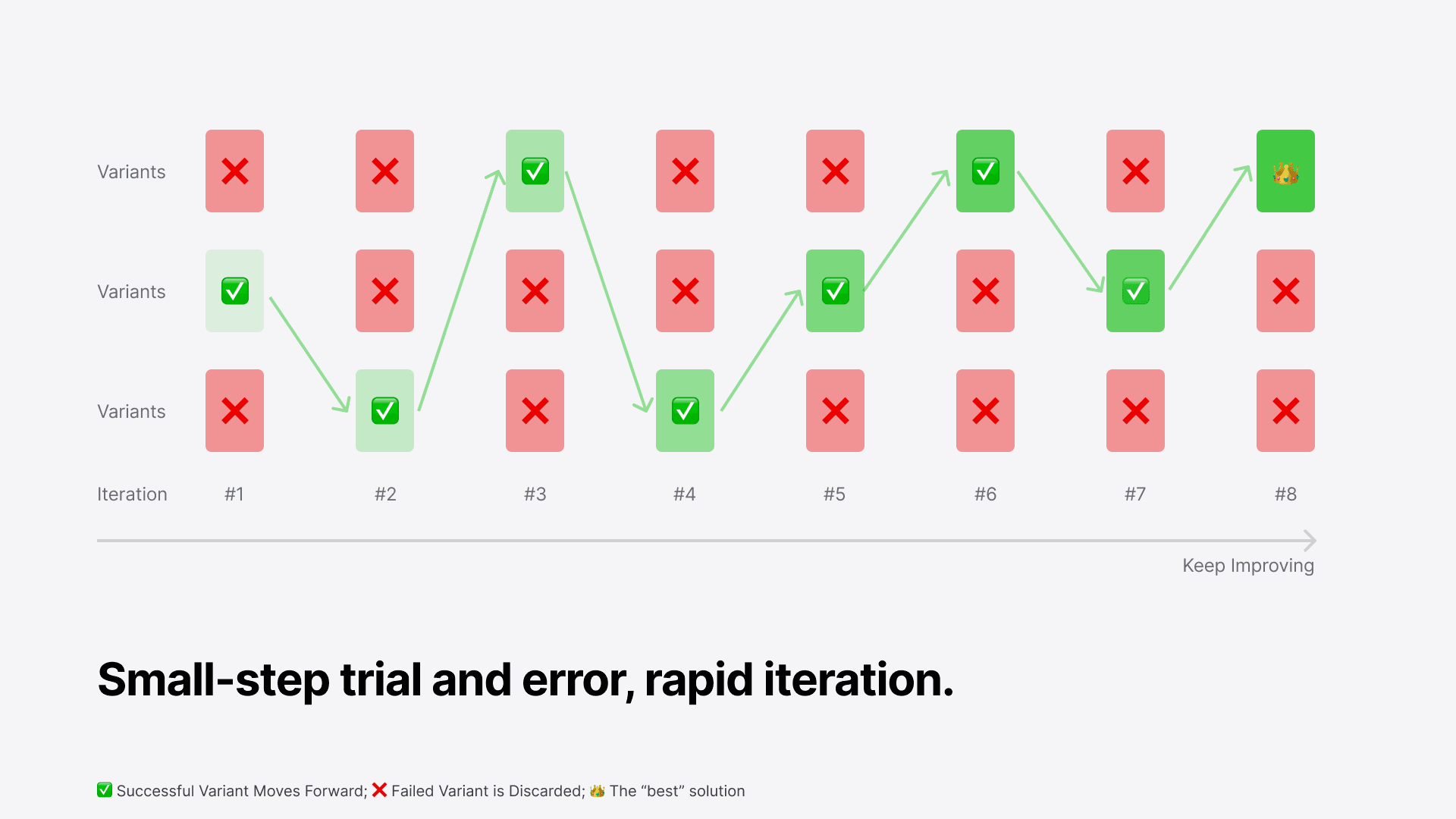
At the heart of A/B testing is the idea of small-step trial and error and rapid iteration.
This is especially useful in industries that change quickly. Instead of trying to come up with the perfect solution right away, A/B testing helps us make small adjustments based on real user feedback. Each little experiment helps us figure out what works a bit better, and over time, we build up small wins that lead to much bigger gains.
A/B testing is not a silver bullet
It can sometimes foster a 'conversion-first' mindset. While positive results from the test may show an increase in conversion rates, they don't always guarantee a better user experience. In fact, those conversions could come at the cost of creating a less enjoyable experience for the user.
Additionally, A/B testing typically focuses on current user preferences and short-term data. It's critical to remember that each experiment should be designed with the long-term goals and vision of the business in mind, ensuring that the changes tested contribute to sustainable value rather than just temporary gains.
A/B testing will only tell you if a strategy is acceptable, but it doesn't explain why users prefer one option over the other. So, it's important to keep asking why users made that choice. In this way, you can gain valuable insights that help you understand your users.